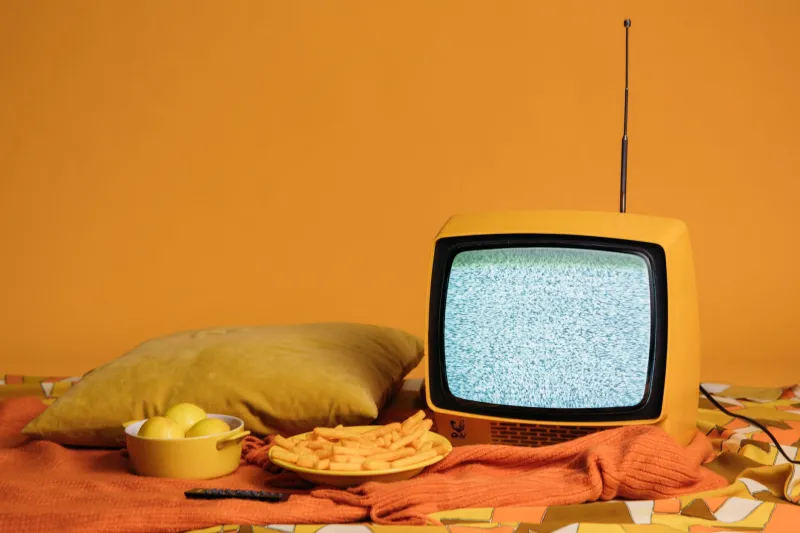
Swap Meets, Sermons, and Static: The Tiny Stations That Refuse to Die
Photo: NBC Television, Public domain, via Wikimedia Commons
There's a station somewhere in the Midwest — we'll call it what it is: a low-power outlet with a tower older than most of its viewers — that airs a swap meet every Saturday morning. Not a show about a swap meet. The swap meet. Cameras pointed at folding tables while a man in a windbreaker describes the going rate for vintage tools.
It's television the way television used to be: local, weird, and completely unbothered by you.
Who Is Actually Running This Thing
The answer, more often than not, is one guy. Sometimes a guy and his wife. Public-access and low-power stations across the country — the ones exempt from the ratings race, the ad market, the whole machinery of entertainment — are typically staffed by volunteers, retirees, and the occasional community college student earning credit. The equipment is donated, inherited, or duct-taped. The budget is a bake sale.
And yet they broadcast. Every week. Church services on Sunday, school board meetings on Tuesday, a high school basketball game on Friday that three hundred people watch and four hundred later argue about at the gas station.
The Programming Is the Point
Try to pitch this lineup to a streaming executive and they'd have you escorted out. But that's exactly what makes it work. There's no algorithm deciding what airs. No engagement metrics. The swap meet guy is on because the swap meet guy showed up with a camera.
Compare that to the national monoculture, where the same six shows get promoted across every platform simultaneously, and the local station starts to look less like a relic and more like a loophole. Nobody is trying to capture your attention for two hours. They're just putting the city council meeting on TV because the city council meeting is on TV.
Who's Watching
Smaller crowds than you'd think, larger than you'd expect. Shut-ins who can't make it to service. Local politics obsessives. Teenagers who discovered the station through a clip that went viral precisely because it was so unpolished. There's a whole generation that grew up on hyper-produced content and now finds a man describing a used table saw weirdly soothing.
The viewership is loyal in a way national television can't buy. When the station went dark for a weekend in one small Ohio town, people called the sheriff. Not the station. The sheriff.
Why It Matters
The monoculture isn't coming for these stations — there's no money in it, which is the only reason they're safe. But they're dying anyway, slowly, from equipment failure and volunteer burnout. FCC license lapses, transmitter costs, the slow attrition of everyone who knows how to patch a signal through a 40-year-old board.
What gets lost isn't just programming. It's a record. The high school game, the funeral of the beloved diner owner, the thirteen-part series on local zoning that nobody asked for and nobody will ever make again. When these stations go, an entire texture of American life goes with them — the unglamorous, hyperlocal broadcast that streaming was supposed to replace and never really did.
So if you've got one of these stations in your town, watch it once. Not out of nostalgia. Out of curiosity. It might be the last television you'll ever see that wasn't made for someone else.