Same Channel, Different You: The Quiet Epidemic of Rewatching Everything You Already Know

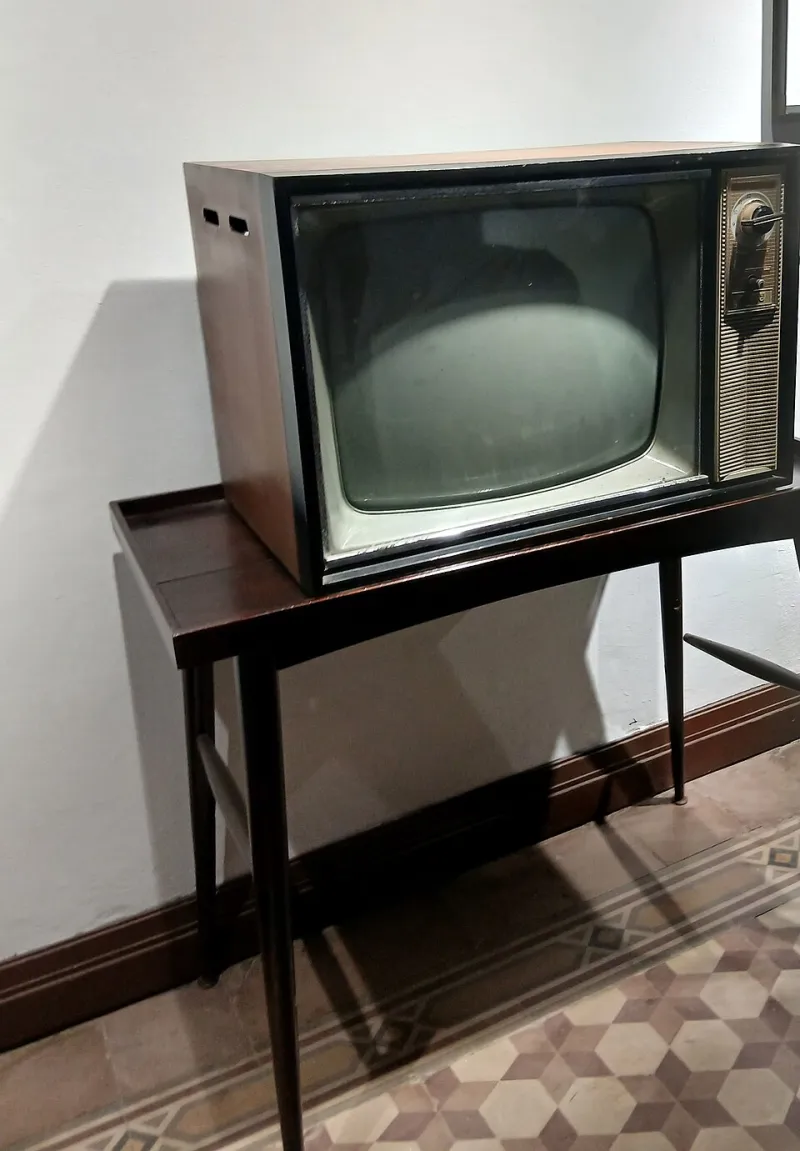
Photo: Buswankers, Public domain, via Wikimedia Commons
Somewhere right now, a thirty-eight-year-old is on their fourth complete rewatch of Buffy the Vampire Slayer. A forty-two-year-old has Seinfeld running in the background while they cook dinner for the third week in a row. A twenty-nine-year-old who technically counts as a millennial has rewound the same Rugrats episode twice this week, not because they forgot what happened, but because they needed to hear it again.
This is not a small thing. Streaming platforms have quietly confirmed what a lot of us already suspected: catalog content — old stuff, finished stuff, stuff that can't surprise you anymore — is pulling serious numbers. Not because the algorithm is pushing it. Because people are actively seeking it out.
So what's going on?
The Comfort Math
There's a psychological concept called "narrative transportation" — the idea that when you get absorbed in a story, your brain partially disengages from your immediate reality. Therapists and researchers have studied it for years. What's interesting is that the effect is actually stronger when the story is familiar. You're not spending cognitive energy tracking plot. You already know who lives, who dies, who gets the joke. That freed-up bandwidth goes somewhere else — usually toward emotional regulation.
Dr. Pamela Rutledge, a media psychologist who has studied this stuff longer than most streaming services have existed, puts it plainly: rewatching is a form of self-soothing that mimics other comfort behaviors. It's the TV equivalent of ordering the same meal at a restaurant you've been going to for years. Reliable. Predictable. Yours.
But there's a layer underneath that which gets less attention.
When you rewatch a show from your childhood, you're not just watching the show. You're watching yourself watching the show. You're pulling up a version of you that existed before a lot of the stuff that's currently stressing you out. Before the job instability. Before the housing market became a psychological horror story. Before the news became something you have to consciously ration to protect your mental health.
That version of you didn't know any of that was coming. And for twenty-two minutes — or forty-four, if you're going prestige — neither do you.
The New Content Problem
Here's the thing nobody in the entertainment industry really wants to say out loud: a lot of new content is exhausting.
Not bad, necessarily. Just demanding. Peak TV gave us extraordinary television, but it also gave us television that requires homework. Episode recaps. Reddit threads explaining what you missed. Twelve-episode seasons that feel like six-hour films. Shows that punish you for looking at your phone for thirty seconds.
Rewatching asks nothing of you. You can fold laundry during it. You can fall asleep and wake up and still know exactly where you are. The emotional stakes are already processed. You cried about that thing in season three years ago. Now you can just watch it happen.
Streaming data analysts — the ones who actually look at play counts rather than completion rates — have started flagging this as a meaningful behavioral shift, especially among millennials and Gen X viewers. The demographic that was supposed to be the core audience for ambitious new prestige content keeps gravitating back to catalog titles from the late nineties and early two-thousands. Networks and platforms have responded by licensing back older shows that they previously let expire, because the demand turned out to be real and sustained.
Friends. The Office. Frasier. Dawson's Creek. Saved by the Bell reruns on Saturday mornings, now streaming on demand so you can recreate the experience without having to wake up at 9am.
When Nostalgia Becomes a Residence
This is where it gets a little more uncomfortable to sit with.
There's a difference between visiting the past and living in it. Most people who rewatch old shows are doing the former — dipping in, getting what they need, coming back out. But some people, and the numbers here are genuinely hard to track, have essentially stopped engaging with new content almost entirely. They cycle through the same shows in rotation. They know episode numbers by heart. They've watched certain seasons so many times that they can predict the exact line before it's delivered.
Psychologists call this a form of behavioral avoidance — not pathological in itself, but worth paying attention to when it becomes the primary strategy for managing anxiety. The problem with comfort as a destination rather than a rest stop is that it tends to shrink your world gradually, without you noticing.
The shows don't change. You do. And if you're only ever looking backward, you might miss the fact that the version of yourself you're trying to return to wasn't actually more comfortable — it was just more ignorant of what was ahead.
That's not a critique. It's worth sitting with.
Who You Were vs. Who You're Watching
There's another angle here that doesn't get talked about enough: identity.
For millennials especially, the cultural touchstones of the nineties and early two-thousands were formative in a way that felt unusually collective. Before the internet fragmented everything into a thousand micro-audiences, there were shows that basically everyone watched. Friends wasn't a niche interest. Neither was The Fresh Prince or Boy Meets World or ER. They were shared infrastructure.
Rewatching those shows is, in part, a way of touching that shared experience again — especially as the present moment feels increasingly fractured and difficult to navigate collectively. The rewatch is a handshake with a version of American culture that felt more legible, even if it wasn't actually better.
And yes, there's a whole conversation to be had about how some of those shows have aged — the jokes that don't land anymore, the representation that was thin or absent, the gender dynamics that read differently now. People are having that conversation, often in real time while rewatching. That tension is part of it too. You're not just watching the show. You're watching what you used to accept without question. That's its own kind of reckoning.
The Signal in the Static
Maybe the rewatch epidemic isn't a retreat. Maybe it's a diagnostic.
When a significant portion of the population starts systematically choosing the known over the new, that tells you something about what the present feels like to live in. It's not that the new shows are worse. It's that the cognitive and emotional cost of engaging with uncertainty — even fictional uncertainty — has gone up. A lot.
The static of daily life is loud right now. Economic anxiety, political noise, a media environment that rewards outrage and punishes nuance. Against that backdrop, sitting down with something that cannot surprise you anymore is a rational response. It's tuning to a frequency you already know.
Whether that's sustainable is a different question. But for now, the channel's on. The theme song is playing. And for a few minutes, it's still the nineties, and nothing bad has happened yet.
You know it has. You just don't have to watch it right now.