Never Finished, Never Over: The Strange Comfort of Stories That Don't End
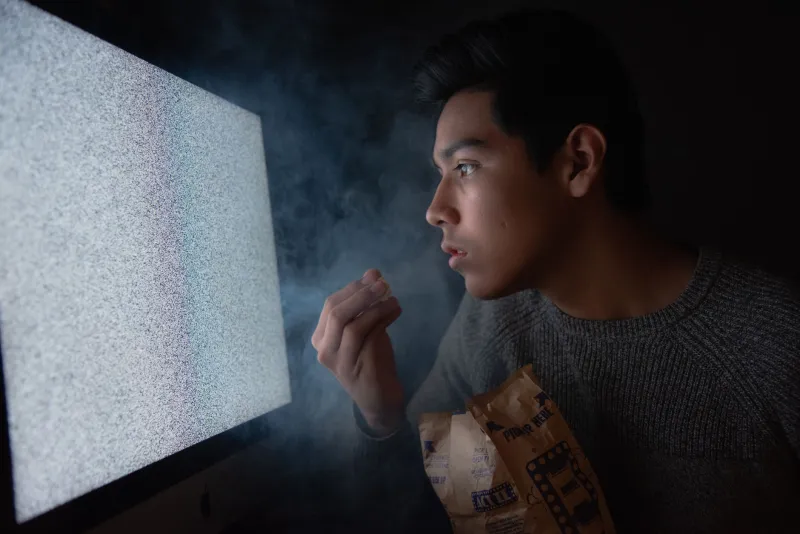
Somewhere in the static between what happened and what might have happened, there's a frequency a lot of us have quietly tuned into. It doesn't broadcast cleanly. It doesn't resolve. And somehow — weirdly, stubbornly — that's exactly why we keep listening.
We talk a lot about closure. Culturally, we treat it like a destination, the thing you're supposed to want after investing yourself in something. But spend any time in the corners of the internet where people obsess over canceled shows, abandoned video game projects, or novels that were never finished, and you start to notice something strange: a lot of those people aren't grieving. They're comfortable. They've made a home out of the incompletion. And they're not sure they'd trade it for an actual ending.
The Ending That Ends Too Much
Here's the thing about a real conclusion: it forecloses possibility. Once a story ends, it becomes a fixed object. The characters stop moving. The world stops breathing. Whatever you imagined might happen — whatever you were quietly hoping for — gets replaced by what did happen, and you don't always get a vote.
An unfinished story, though? That thing stays alive. It keeps generating. Every fan theory, every Reddit thread, every late-night conversation about what should have happened is the story continuing to exist in a way a finished one simply can't. The incompletion isn't a flaw. For a lot of audiences, it's the feature.
Psychologists have a name adjacent to this: the Zeigarnik effect. It's the well-documented tendency for people to remember interrupted tasks more vividly than completed ones. Your brain treats unresolved loops as open files, keeping them active, returning to them, refusing to archive them. Applied to storytelling, this means an unfinished narrative occupies a kind of permanent foreground in your mental space. It doesn't fade the way finished things do.
Streaming Made Incompletion Normal
For most of entertainment history, incompletion was an accident. A show got canceled mid-arc. A writer died before finishing their trilogy. A studio pulled funding. These were failures — painful ones — and audiences felt the loss accordingly.
But something shifted in the streaming era. With so much content launching and disappearing at such velocity, getting attached to something that doesn't finish has become less of an anomaly and more of a baseline expectation. Netflix cancels critically loved shows after two seasons. Platforms shutter entire libraries overnight. Projects get greenlit, hyped, and quietly buried before they ever find an audience.
And yet — people keep watching. Keep getting attached. Keep finding the unfinished things and making them their own.
There's an argument to be made that streaming culture didn't just normalize incompletion; it accidentally trained audiences to find meaning inside it. When you know something might disappear, you hold it differently. You pay closer attention. You fill in the gaps yourself. The relationship between viewer and story becomes more active, more collaborative, more yours in a way that a neatly packaged ten-season arc simply isn't.
What You Build in the Space Between
Fan communities around unfinished properties are some of the most creatively alive spaces on the internet right now. Shows that got two seasons and a cancellation notice often generate more fan fiction, more art, more discussion than shows that ran for a decade and wrapped with a bow. The incompletion becomes an invitation.
There's something almost architectural about what happens in those spaces. Fans aren't just mourning what didn't get made — they're constructing it. Building out the rooms the original creators never got to. Deciding what the characters became, where the world went, how the threads resolved. The unfinished story becomes raw material, and the audience becomes the builder.
This is different from the experience of engaging with a complete story. With a finished narrative, you're a visitor. You walk through someone else's house, appreciate what they built, and leave. With an unfinished one, you get handed the blueprints and told — implicitly, by the absence — to figure out the rest. A lot of people, it turns out, prefer the blueprints.
Anticipation as Its Own Reward
There's a version of this that goes even further. Some audiences aren't just comfortable with incompletion — they're actively seeking it out. They'll start a long-running book series knowing the author hasn't finished it. They'll get deep into an ongoing webcomic with no end in sight. They'll invest in a game with years of promised DLC and updates, the perpetual horizon of more being part of what makes it appealing.
What they're chasing isn't resolution. It's the sustained state of anticipation — that particular quality of attention you can only maintain when you don't know how something ends. The moment a story concludes, that anticipation collapses. You can revisit it, sure. But you can't un-know the ending. The texture of not-knowing is gone.
For some people, that texture is the entire point. The story in a state of becoming is more alive than the story in a state of having been. The potential of what could happen carries an emotional charge that even the best actual ending can struggle to match.
The Problem With Getting What You Want
There's a quiet tragedy buried in some of the most beloved revivals and continuations in recent pop culture history. Fans campaign for years to get a canceled show back, a dormant franchise revived, a long-delayed sequel finally made. Sometimes they win. And sometimes — not always, but sometimes — the finished thing lands with a thud, and people realize they liked it better when it was still a dream.
Because the dream was theirs. The imagined version of what it could have been was built from their own hopes, their own sense of what the story deserved. The actual continuation belongs to someone else's creative choices, someone else's budget constraints, someone else's vision of where things should go. The finished thing is real. The unfinished thing was personal.
That distinction matters more than we usually admit.
Living in the Signal
Maybe what all of this points to is something about how we actually experience stories — not as passive receivers of completed content, but as active participants in an ongoing imaginative process. The narrative isn't just the thing that was made. It's the thing that gets made and remade in the space between the screen and whoever's watching.
Unfinished stories keep that space open. They refuse to close the loop, and in doing so, they refuse to stop asking something of you. They keep you inside the experience in a way that completion, for all its satisfactions, simply can't.
Somewhere between the last frame and what comes next, there's a frequency worth sitting with. It doesn't resolve. It doesn't sign off. It just keeps transmitting, patient and open, waiting to see what you do with the silence.
And honestly? That might be the most honest thing a story can do.