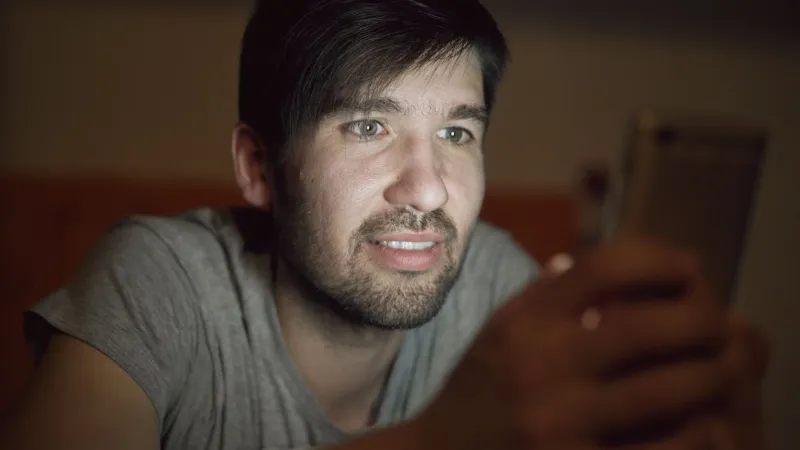
You Signed a Contract You Never Read: The Hidden Emotional Debt of Following Creators Online
There's a specific kind of hurt that doesn't have great vocabulary yet. It's not heartbreak, not exactly. It's not the grief you'd feel losing someone close. But it's not nothing, either. It shows up when a creator you've watched for three years says something that feels like a slap, or when their scandal breaks and your first instinct—before you can stop yourself—is how could they do this to me.
To me. As if they knew you were there.
This is the parasocial paradox, and it's one of the stranger psychological phenomena the internet has quietly normalized. We form deep, directional emotional bonds with people who have no awareness of our existence, and when those bonds shatter, the wreckage is real—even when the relationship technically never was.
The Invisible Handshake
Here's what happens when you start following a creator in earnest. You learn their habits. You pick up on their sense of humor, their pet phrases, the way they pause before saying something they think is controversial. You know their dog's name, their complicated relationship with their hometown, the year everything went wrong for them and how they talked about climbing back out.
That's not superficial knowledge. That's intimacy-adjacent. And your brain, which evolved in a world where that kind of familiarity meant you were genuinely close to someone, doesn't always clock the difference.
Psychologists call this a parasocial relationship—a one-sided bond where one party invests emotional energy, attention, and care into someone who doesn't reciprocate because they literally can't. The concept has been around since the 1950s, originally applied to radio and TV personalities. But what streaming platforms and social media have done is turbocharged the mechanism in ways researchers are still scrambling to map.
The old model of celebrity created distance by design. A movie star existed in a different stratosphere—curated, unreachable, fundamentally other. The parasocial pull was there, but the gap was visible. You knew you didn't know them.
That gap has collapsed.
Proximity Engineering
The modern creator economy is built, whether intentionally or not, on the systematic dismantling of that distance. Vlogs shot in bedrooms. Stories posted at midnight. Streams where someone is literally eating dinner while talking to chat. The aesthetic is unfiltered, the content is real, and the algorithm rewards whoever makes you feel like you're hanging out rather than watching a performance.
Platforms have financial incentives to deepen these bonds. The longer you feel connected to a creator, the longer you stay on the platform. Subscriptions, memberships, Patreons, Super Chats—these aren't just revenue streams, they're attachment mechanisms. Paying for access to someone's inner circle activates something in the brain that feels like reciprocity, like the relationship is mutual now because you've put skin in the game.
It isn't. But it feels like it is. And that feeling is the whole product.
What platforms don't advertise is the psychological contract embedded in all of this. By consuming someone's content long enough—especially the vulnerable, confessional, here's-who-I-really-am variety—you start to form expectations. About their values. About how they'll behave. About what kind of person they are when it counts. You're not consciously writing these expectations down. But they accumulate, invisible and binding, until the moment they're violated.
When the Signal Breaks
The betrayal, when it comes, almost never involves you personally. A creator says something politically charged that contradicts everything you thought they stood for. They get caught behaving badly toward people in their orbit. They take a brand deal that feels like a fundamental sellout. They just... change, gradually, into someone you don't recognize.
And the response—your response—is disproportionate in a way that confuses even you.
Because logically, you know this person owes you nothing beyond whatever content you paid for, if you paid at all. They're not your friend. You're not in their phone. But logic doesn't govern how grief works, and that's what a lot of parasocial fallout actually is: grief. The loss of a relationship you'd built in your head over months or years, populated with your assumptions, your projections, your need for them to be the person you decided they were.
The intensity of that grief tends to scale with how much of yourself you brought to the dynamic. If a creator's content helped you through a hard period—a breakup, a job loss, the specific loneliness of a pandemic winter—then their image is entangled with your own recovery narrative. Watching them implode doesn't just change how you see them. It threatens to retroactively alter something you went through.
That's not dramatic. That's just how memory and meaning work.
The Labor Nobody Talks About
What gets underexamined in most conversations about parasocial relationships is the emotional labor involved—on the audience's side. Following a creator closely is work. You track their storylines, you hold context, you adjust your understanding of them as they evolve. You defend them in comment sections. You feel secondhand embarrassment on their behalf. You worry about them during their dark patches.
None of that labor is acknowledged because none of it is visible. There's no cultural framework for grieving a parasocial bond, which means when it breaks, people often process it alone and sideways—as anger, as cynicism, as a vague decision to never get attached to anyone online again that lasts about three weeks before the next creator starts to feel like a friend.
The parasocial economy runs on this cycle. Attach, invest, feel betrayed, detach, reattach. Rinse, repeat. The platforms profit at every stage.
Finding the Signal in the Static
None of this means you're broken for caring about creators you've never met. Humans form bonds through stories, through voices, through consistent presence over time. That's not a bug in your psychology—it's the whole architecture. The problem is an ecosystem that exploits that architecture without ever naming what it's doing.
The more useful move isn't emotional detachment. It's clarity. Knowing that a creator's carefully edited vulnerability is still a performance—not fake, necessarily, but curated—changes the texture of how you receive it. Recognizing that your parasocial investment is real, even if the relationship isn't, gives you permission to grieve it properly when it ends without confusing the grief for something it isn't.
You didn't lose a friend. You lost a version of someone you'd constructed from signals and static. That's still a loss. It just needs different language than the ones we already have.
We're all still figuring out what that language sounds like.