Gone Account: The Internet Personalities Who Shaped You and Then Disappeared
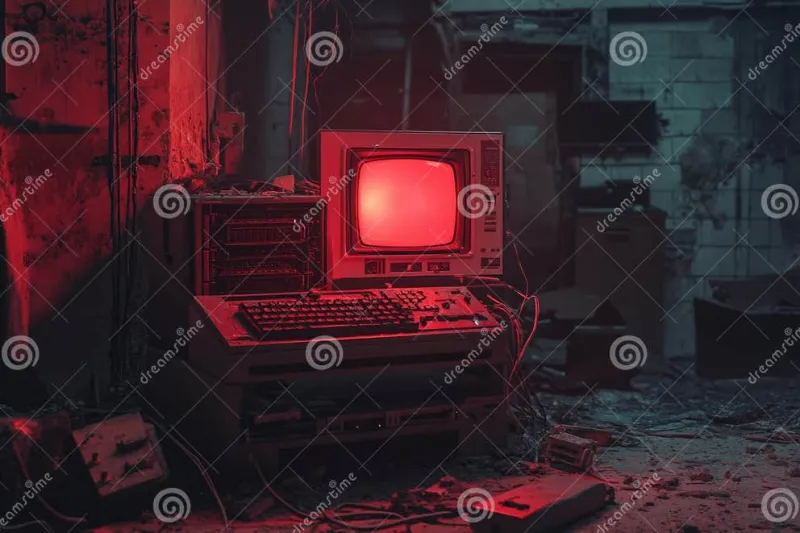
Photo: abandoned computer screen glowing dark room nostalgic, via thumbs.dreamstime.com
Somewhere in your browser history — or maybe just in the back of your brain, in that folder where you keep things you can't quite name — there's a person you used to watch. Maybe every week. Maybe every day for a weird three-month stretch in 2013 or 2017 or 2021. They had a YouTube channel or a Twitch stream or a blog with a custom header image they clearly spent too long making. They knew how to talk to a camera or a text box in a way that felt like they were talking specifically to you.
And then they were gone.
No farewell video. No final post. Sometimes a last upload that felt totally normal, like they expected to be back next week. And then: nothing. The channel is still there, technically, preserved in amber by platform inertia. But they're not.
This happens constantly. And we barely talk about it.
The Micro-Influencer Half-Life
The word "influencer" has become so loaded that it obscures something important: the vast majority of people who built real, meaningful online audiences never crossed into mainstream recognition. They existed in a middle layer — too big to be nobodies, too small to be celebrities — where they shaped taste, language, and community norms for thousands of people who genuinely cared.
Think about the gaming YouTubers who were doing Let's Plays before PewDiePie was a household name. The beauty bloggers who built loyal followings before "the algorithm" became a phrase everyone understood. The Tumblr writers who had thousands of reblogs and real cultural influence within their communities, then watched the platform collapse under them. The Vine comedians who built a specific comedic vocabulary that still shows up in how people make jokes today, even though most of them are now just... gone.
These people had real impact. They just didn't have the infrastructure — the management deals, the brand partnerships, the media coverage — that would have preserved their legacy in any searchable, citable form.
What Gets Preserved and What Gets Lost
Internet memory is deeply uneven. The biggest names get documented. There are YouTube documentaries about defunct channels with millions of subscribers. There are Reddit threads cataloging the drama around major platform personalities. But the people who mattered intensely to smaller communities — the ones who ran Discord servers and answered DMs and made the niche feel like a neighborhood — those people mostly just evaporate.
A Twitch streamer who peaked at 800 concurrent viewers and built a genuinely tight community before burning out doesn't leave much of a trace. A food blogger who was the definitive voice on a specific regional cuisine for five years, then stopped posting, is basically unfindable now unless you already know what you're looking for. An ASMR creator who helped thousands of people with anxiety sleep through 2020 might have a channel that still exists but is functionally invisible to anyone who didn't already subscribe.
The platforms don't have great incentives to preserve this stuff. Old content from inactive accounts doesn't drive engagement. It doesn't serve the algorithm. It's just weight.
The Parasocial Math
Here's the thing about parasocial relationships that doesn't get discussed enough: they're real. The feelings aren't simulated. When someone you watched regularly for years stops showing up, there's an actual sense of loss — even if you never exchanged a single message, even if they had no idea you existed.
Psychologists who study parasocial dynamics note that the brain processes regular media figures through some of the same social circuitry it uses for actual relationships. You learn their speech patterns, their opinions, their habits. You build a model of them. And when that model suddenly has no new data coming in, there's a gap.
The internet has made this dynamic more intense and more disposable at the same time. You can follow someone for three years, feel genuinely connected to their life, and then watch them disappear without any of the closure rituals that mark the end of real-world relationships. No goodbye. No forwarding address. Just a channel that hasn't uploaded in 847 days.
Why They Leave (And Why We Forget)
The reasons people abandon online personas are mundane and devastating in equal measure. Burnout is the most common — the content treadmill is genuinely brutal, especially for people who never monetized enough to make it sustainable. Life changes. Mental health crises. Platform shifts that made their format suddenly irrelevant. Sometimes just the gradual realization that the thing they loved making had become a job they hated.
But the forgetting — that's more interesting. Why do communities that were so tight, so engaged, dissolve so completely when the central figure leaves?
Part of it is structural. Online communities tend to orbit personalities rather than ideas. When the personality leaves, the community has no center. Discord servers go quiet. Subreddits get locked. The group chat stops getting messages. Without a shared feed to react to, the social glue dissolves faster than anyone expects.
Part of it is the relentless forward momentum of the feed itself. Platforms are designed to keep you in the present tense. Nostalgia doesn't serve the algorithm. You're always being pushed toward what's new, what's active, what's generating engagement right now. The past gets buried not through active deletion but through simple deprioritization.
The Ghosts Are Still There
If you know where to look, you can find them. Wayback Machine snapshots of blogs that haven't been updated since 2015. YouTube channels with comment sections that are like little time capsules — people tagging each other, asking if anyone knows what happened, occasionally a comment from the creator themselves that's years old and never got a reply.
There's a specific kind of internet archaeology that some people do — hunting down these abandoned spaces, documenting what was there, trying to reconstruct communities that no longer exist. It's part archival impulse, part grief processing.
The people who disappeared didn't stop mattering the moment they stopped posting. They were real, and the things they made were real, and the communities they built were real. The fact that the platform doesn't surface them anymore is a statement about how the platform works, not about whether any of it mattered.
Somewhere, right now, someone is rewatching a video from a channel that hasn't uploaded in four years, in a comment section where half the accounts are deactivated, feeling something they can't quite name.
That feeling is the signal. The static is full of it.