Frame by Frame: The Quiet Revolution of Watching Without Actually Watching
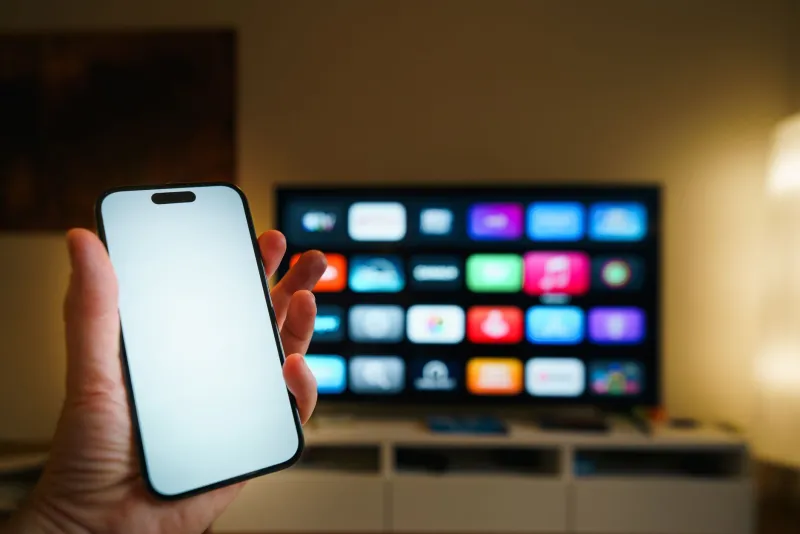
There's a specific kind of person you've probably seen — maybe you've been them — who pauses a show, pulls out their phone, and photographs the television. Not because something went wrong. Not because there's a spider on the screen. Because something went right, and the instinct to capture it arrived faster than the instinct to just... feel it.
This is the world we live in now. And it's worth asking what exactly we traded away when we made that swap.
The Pause Button as a Creative Tool
The screenshot reflex didn't come from nowhere. It evolved alongside social media platforms that rewarded the shareable moment over the sustained experience. Twitter threads built around a single freeze-frame. TikTok reactions to one specific line of dialogue. Reddit threads dissecting a costume choice visible for maybe four seconds in a background shot.
The technology made pausing easy. The platforms made pausing profitable — not in money, necessarily, but in attention, in likes, in the soft currency of being the person who caught the thing first.
And so we learned to watch differently. We started scanning for the moment worth pausing on instead of surrendering to the flow of the story. The narrative became a delivery mechanism for extractable content rather than an experience with its own internal logic.
There's nothing inherently wrong with that. But it's a fundamentally different relationship with entertainment than the one most of us grew up with.
From Audience to Archivist
Here's the shift that doesn't get talked about enough: when you screenshot a scene and post it, you're not responding to the show anymore. You're producing something. You've stepped out of the audience and into the role of creator, editor, and distributor — all in about fifteen seconds.
That's a psychological gear change. The passive experience of being told a story gets interrupted by the active work of curating and contextualizing a moment for someone else's consumption. You're no longer inside the narrative. You're outside it, pointing at it.
Psychologists who study attention talk about the cost of task-switching — the mental energy it takes to move between different modes of engagement. Every time you pause to document, you're switching modes. You exit the story, do the work of capturing and framing and sometimes captioning, then try to re-enter. Except re-entry is never clean. You're carrying the meta-awareness of having just been a producer, and that awareness doesn't fully dissolve when you hit play again.
The result is a viewing experience that's perpetually split. Part of you is watching. Part of you is watching yourself watch.
The Highlight Reel Problem
There's a version of this that feels genuinely communal and kind of wonderful. Sharing a screenshot of a line that wrecked you emotionally, or a visual gag that landed perfectly, or a costume detail that nobody in your real-life circle would care about — that's connection. That's finding your people through specificity.
But there's another version that's more uncomfortable to examine. When the screenshot becomes the goal, the show becomes a scavenger hunt. You're not watching Succession or The Bear or whatever prestige cable drama is currently eating your weekends — you're mining it for usable content. The scenes that don't yield a good frame become, almost unconsciously, less valuable. The slow burn, the quiet character moment, the scene where nothing quotable happens but everything matters — those start feeling like dead air between the good parts.
And the good parts are only good if they're legible out of context. If they work as a standalone image or a five-second clip. Which is a strange filter to run a story through.
What Gets Lost in the Crop
Context is the thing that gets cropped out. Literally and figuratively.
A screenshot of a character's face mid-breakdown, divorced from the forty minutes of buildup that made the breakdown mean something, is just a face. It might be a face with a great expression. It might go viral. But it's not the thing the show was trying to do. It's the residue of the thing.
This matters more than it sounds like it does. When we train ourselves to extract meaning in still frames, we start expecting meaning to arrive that way. We lose patience for the accumulation of context that makes a payoff actually pay off. The slow reveal, the long game, the episode that only makes sense in retrospect — those become harder to sit with because they resist the screenshot. They won't compress into a shareable unit without losing everything that made them work.
Some shows have started to account for this. You can feel it in the way certain scenes are constructed now — the pause-worthy composition, the line that works as a caption, the moment staged almost like a still photograph. The medium is quietly adapting to how we're consuming it, which is either clever or a little sad depending on how you look at it.
The Entertainer Inside the Entertainment
Maybe the most honest thing to say is that we've all internalized the logic of the creator economy without necessarily signing up for it. The platforms taught us that every moment is potential content, that attention is currency, that the right capture at the right time is its own kind of performance.
So we perform. Even alone on the couch at 11pm, nominally unwinding, we're performing — for our followers, for the group chat, for the version of ourselves that exists in the feed.
The pause isn't just a pause anymore. It's a decision. A micro-editorial choice about what's worth preserving, what's worth sharing, what's worth interrupting the story for. That's not nothing. It takes something.
Whether what it takes is worth what it gives back is a question each person's going to answer differently. But it's worth asking, at least once, what it would feel like to watch something all the way through without reaching for your phone. Not as a challenge. Just as a reminder that the experience exists — unfiltered, unpaused, unposted — if you want it.
The story's still there. It's just waiting for you to stop documenting it long enough to let it land.