Appointment Television Is Back and Gen Z Is the One Watching It
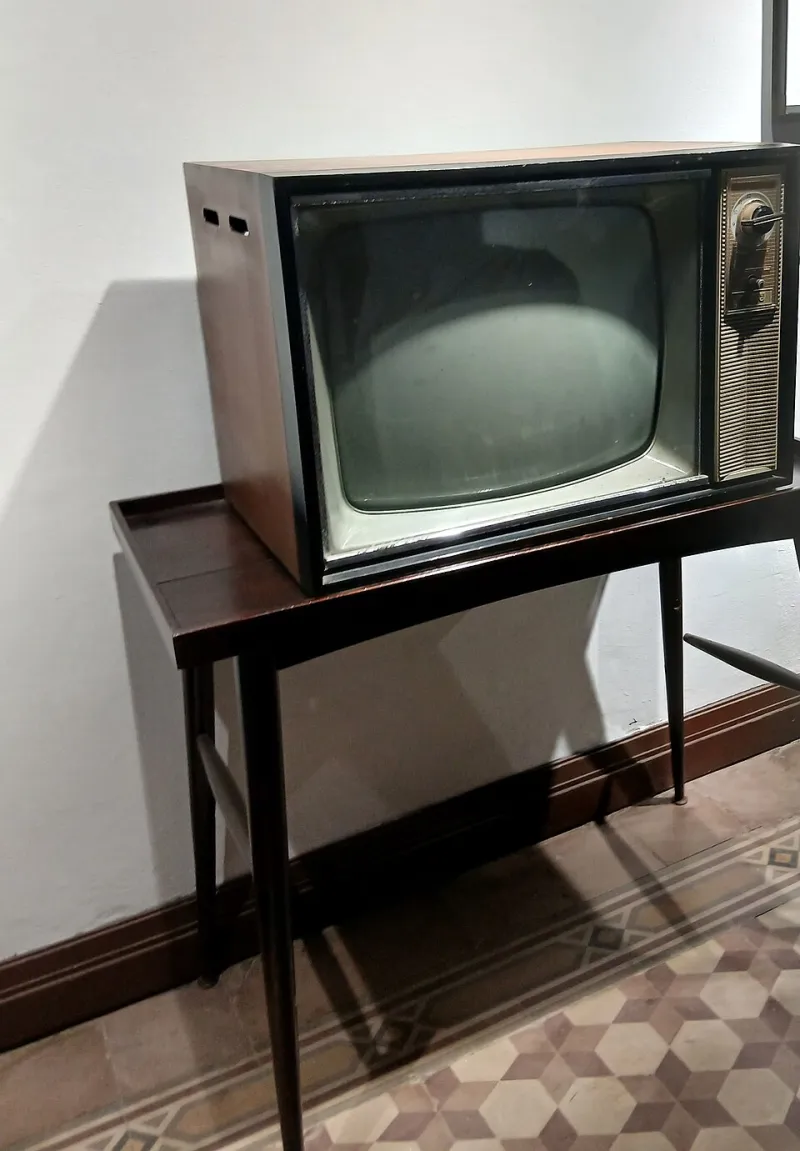
Photo: Naula Ayisabun Aningore, CC BY-SA 4.0, via Wikimedia Commons
Kayla is 22, lives in Columbus, Ohio, and has access to every streaming platform worth having. She could, at any given moment, pull up virtually anything ever put on film. Instead, three nights a week, she sits down at 8 PM and watches whatever Law & Order episode happens to be airing on cable. She doesn't check what episode it is. She doesn't skip the commercials. She just watches.
"It sounds insane when I say it out loud," she admits. "But it's the most relaxed I feel all day."
Kayla is not alone. And the more you dig into it, the less insane it sounds.
The Scroll Is Exhausting and Everyone Knows It
Here's the thing nobody in the streaming industry wants to say too loudly: infinite choice is genuinely tiring. The decision fatigue that comes with staring at a home screen full of personalized recommendations — each one selected by an algorithm that has profiled your every watch habit — is a real and documented phenomenon. It's choice architecture that was designed to keep you engaged and instead sometimes makes you want to close the laptop and stare at a wall.
Old cable TV, by contrast, had a schedule. The schedule was not about you. The schedule did not care what you were in the mood for. Something was on, and you either watched it or you didn't. That indifference, it turns out, is kind of a relief.
"Netflix asks me what I want every single time I open it, and I hate it," said Devon, 24, from Atlanta. "Cable just tells me what's happening. There's something really peaceful about that."
The Rerun as Ritual
Syndicated reruns occupy a specific cultural space that's easy to underestimate. These are shows — your Fraisers, your Everybody Loves Raymonds, your procedural crime dramas with their comforting episodic closure — that have been culturally digested so thoroughly that watching them feels less like consuming media and more like visiting somewhere familiar.
For younger viewers who didn't grow up watching these shows in their original run, there's an added layer of distance that makes them weirdly safe. The stakes feel low. The aesthetics feel retro without being ironic about it. Nothing is optimized for virality. Nobody is trying to make a clip for TikTok.
"I watch Frasier reruns on Paramount Network sometimes," said Tyler, a 21-year-old from Phoenix. "I've seen most of the episodes. But I'll still just let it play. It's like having someone else be in charge for a while."
That phrase — having someone else be in charge — came up more than once in our conversations. It points to something real about what passive television watching offers that streaming can't quite replicate: the genuine absence of control, and the rest that comes with it.
Commercials as Intermission
Possibly the most counterintuitive part of this whole trend is the role of commercials. Conventional wisdom — and the entire streaming industry's pitch — is that ads are an obstacle, a punishment, something to be eliminated or at least minimized. But for a growing number of younger viewers, the commercial break is functioning as something closer to a natural pause.
"I get up and get water. I check my phone. I come back," said Marisol, 23, from Denver. "It's like a built-in break. Streaming I just keep watching until suddenly it's 2 AM and I feel terrible."
The binge-watch model, revolutionary when Netflix introduced it, has had roughly a decade to reveal its downsides. The autoplay feature that removes the friction of choosing to keep going. The lack of any external structure telling you when it might be reasonable to stop. The way an entire season can disappear into a single blurry evening that you'll struggle to fully remember.
Cable reruns, with their commercial breaks and their time slots and their network scheduling logic, impose a structure that streaming deliberately removed. Turns out some people miss the structure.
Algorithmic Resistance, Accidentally
There's a political dimension to this that the people doing it usually aren't thinking about consciously, but it's there. Every major streaming platform is in the business of learning you — your tastes, your moods, your attention span, your tolerance for subtitles — and feeding that data back to you as personalization. The feed knows you. The recommendation engine has a model of you that's probably pretty accurate.
Watching syndicated cable is, functionally, an opt-out. The TV schedule doesn't have a profile on you. The algorithm that put NCIS in the 9 PM slot isn't trying to deepen its understanding of your psychology. It's just filling time with content people broadly like.
For a generation that grew up with personalization as the default, that anonymity is genuinely novel.
"My streaming services feel like they're always watching me watch them," said Jordan, 25, from Seattle. "Cable doesn't care about me at all. That's kind of the point."
Not Nostalgia, Exactly
It's tempting to frame this as nostalgia, but that's not quite right. Most of these viewers are too young to be nostalgic for the era of appointment television. They didn't live through Must-See TV Thursdays. They didn't grow up waiting a week between episodes. What they're experiencing isn't longing for a past they remember — it's curiosity about, and comfort in, a different relationship with media than the one they were born into.
Old cable TV is, for them, something close to what lo-fi aesthetics are to music: not better, not worse, but different in ways that feel meaningful precisely because they're different from the dominant mode.
The static doesn't know your name. Sometimes that's exactly what you need.
The Signal in the Noise
None of this means cable TV is staging some massive comeback. The ratings numbers aren't going to suddenly reverse decades of decline. But as a cultural signal, the trend is worth paying attention to. When digital natives start voluntarily watching commercials as a form of relaxation, something is being said about the shape of digital life and what it's costing people.
The personalized, infinite, frictionless entertainment machine is very good at a lot of things. What it's not good at is leaving you alone. And sometimes, leaving you alone is the whole point.