Why We Can't Stop Watching Things Fall Apart: The Rise of Glitch as High Art
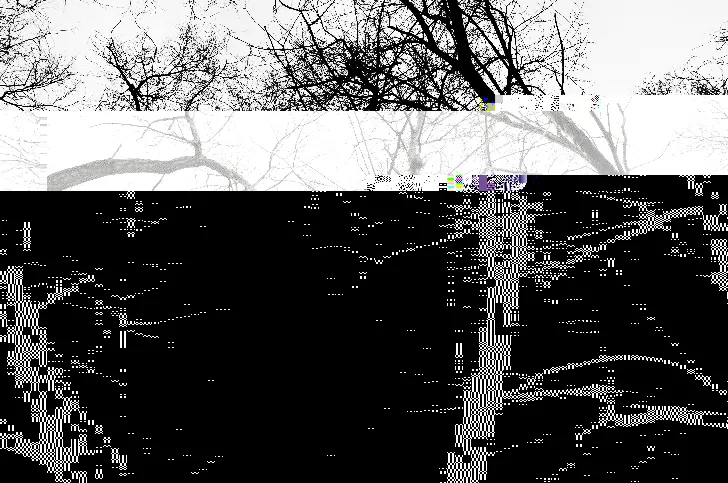
Photo: Lucas Rafael Tenllado Gil, CC BY-SA 4.0, via Wikimedia Commons
Let's start with a confession: the first time I saw a datamosh video — one of those clips where the compression data gets deliberately scrambled so faces melt into backgrounds and motion smears across the frame like wet paint — I watched it four times in a row. Not because I was analyzing it. Because it was beautiful in a way I didn't have words for yet.
I'm not alone in this. Something has shifted in American visual culture over the last several years, and it has a lot to do with error messages.
The Aesthetic of the Accident
Glitch art isn't new. Artists have been intentionally corrupting digital files, bending circuits, and exploiting technological failure since at least the 1990s. But what's changed is who's paying attention — and how much they're willing to pay.
What used to be a niche practice confined to experimental art circles and underground music scenes has crept into mainstream visual culture in a way that feels genuinely significant. You can see it in music video aesthetics, in graphic design trends, in the visual language of indie games, in the way certain photographers deliberately introduce noise and distortion into their work. The glitch isn't something to be corrected anymore. It's the point.
And for a generation that grew up watching YouTube videos buffer and Skype calls freeze mid-sentence, there's something almost nostalgic about it. Digital failure has a texture. It has a feeling. And artists — particularly younger ones — have figured out how to weaponize that feeling.
What Datamoshing Actually Is (and Why It Looks Like That)
For the uninitiated: datamoshing is a technique that exploits how video compression works. Video codecs like H.264 don't store every frame as a complete image — they store "keyframes" and then record only the changes between frames to save file size. Datamoshing involves removing or duplicating those keyframes, so the visual data from one scene "bleeds" into another. The result is that motion information from one clip gets applied to the still image of another, creating that signature smearing, melting effect.
The reason it looks so strange — and so compelling — is that it's a genuine artifact of how digital video works. It's not a filter. It's not a preset. It's the underlying logic of compression made visible, like seeing the skeleton of the medium itself.
Circuit bending, the audio equivalent, operates on similar principles. You take a piece of electronic equipment — a toy keyboard, a drum machine, a cheap effects pedal — and you deliberately short-circuit it, connect components that weren't meant to be connected, and see what sounds come out. The results are unpredictable, often genuinely alien, and weirdly expressive in a way that perfectly constructed synthesizer tones sometimes aren't.
Polish Is the Problem
Here's the cultural diagnosis that nobody wants to say out loud: we've made digital production too good, and it's making everything feel fake.
The average Instagram photo has been processed through a phone's computational photography system, run through a filter, and edited in an app before it ever reaches your eyes. Podcast audio gets noise-reduced to the point where it sounds like the host is speaking from inside a padded room. Music is pitch-corrected and quantized until it has the rhythmic precision of a machine. Everything is clean. Everything is smooth. Everything is optimized.
And people are starting to find that suffocating.
The appeal of glitch aesthetics is, in large part, a rejection of that optimization. A corrupted image says: something real happened here. A distorted audio signal says: this wasn't controlled. The imperfection is evidence of process, of materiality, of the fact that something actually occurred rather than being assembled from presets.
Gen Z, in particular, has grown up in a media environment so saturated with polish that roughness has become the signal of authenticity. If it looks too good, it's probably trying to sell you something. If it's broken, at least it's honest.
The Market Catches Up
What's interesting is watching the commercial world try to keep up with this.
Fashion brands have started incorporating glitch aesthetics into their campaigns. Major-label music videos borrow datamosh techniques that were experimental art five years ago. There's an entire cottage industry of Photoshop plugins and video effects designed to make clean, polished content look corrupted — which is, if you think about it, kind of hilarious. Simulated failure for people who want the aesthetic without the accident.
The art world has been slower but is catching up. Glitch art pieces have sold at auction. Gallery shows dedicated to digital corruption aesthetics have run in New York, LA, and Chicago. Artists like Sabato Visconti, whose work deliberately destroys image data to create something new, have moved from internet obscurity to legitimate critical recognition.
The tension — and it's a productive one — is between glitch as genuine practice and glitch as trend. When a technique gets absorbed into the mainstream, it loses some of what made it meaningful. The corruption becomes controlled. The accident becomes intentional. The failure becomes a success.
But the best practitioners keep finding new ways to break things.
What We're Actually Looking For
There's a deeper question underneath all of this, and it's worth sitting with: why does failure feel meaningful right now?
One answer is technological. We've reached a point where AI-generated images are often indistinguishable from photographs, where voice cloning is a consumer product, where deepfakes are a documented political concern. In that environment, the glitch — the thing that can't be faked cleanly, the error that reveals the machine underneath — becomes a kind of proof of life. It says: a real process happened here. Something broke. Nothing that was supposed to be perfect would look like this.
Another answer is emotional. We are living through a period of profound cultural anxiety about technology — about what it's doing to attention, to relationships, to reality itself. Glitch art gives that anxiety a form. It makes the fragility of digital systems visible, turns the thing we're afraid of into something we can look at directly. There's genuine catharsis in watching a face dissolve into pixels, in hearing a melody break apart into static.
And maybe there's something simpler too. Maybe beauty has always lived at the edge of control. The crack in the ceramic glaze. The feedback squeal in a live recording. The moment a dancer stumbles and recovers. We've always been drawn to the places where the system almost — but not quite — holds together.
The screen glitches. The signal breaks. And in that break, something true comes through.
That's the whole thing, right there.