Hours of Nothing, Priced Like Art: Inside America's Obsession With Dead Tape
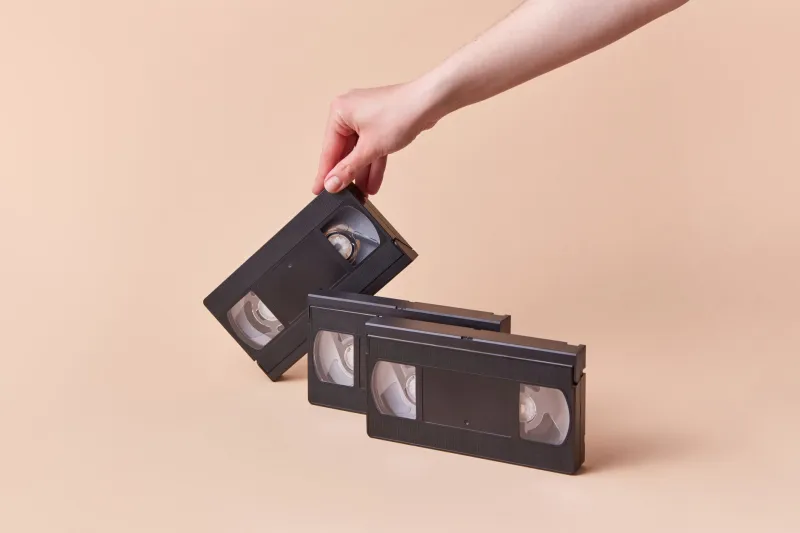
There's a tape sitting in a climate-controlled storage unit in Ohio labeled only in fading ballpoint: CHANNEL 21 — 10/14/88 — DO NOT TAPE OVER. Nobody knows what's on it. That's exactly why three collectors are currently bidding it past $400.
Welcome to the analog tape market — the strangest corner of the entertainment economy, where the most valuable recordings are the ones nobody ever meant to keep.
What Exactly Is Being Sold Here?
Ask a seller what's on a tape and you'll often get a shrug. Maybe two hours of a local news broadcast from a station that shut down in 1994. Maybe a church telethon, a car commercial for a dealership that no longer exists, or — the holy grail — unedited public access footage of regular people being gloriously, uncomfortably themselves.
The collecting community breaks it into rough tiers:
- Broadcast orphans: recordings of dead local stations, the smaller the market the better
- Public access gold: call-in shows, community theater, man-on-the-street segments
- Unlabeled mystery tape: the gamble category, priced like scratch tickets
- Home footage: weddings, birthdays, someone's dad testing a new camcorder
That last one raises eyebrows, and collectors are quick to draw lines — the market runs on consent and common sense. But a birthday party from 1991, posted with the family's blessing? That's a time machine.
Why Static Beats Streaming
Here's the paradox: we live in an era where virtually everything is available instantly, and yet people are paying triple digits for degraded copies of things that were never popular in the first place.
The answer is texture. Streaming gives you the same polished image whether you're in Seattle or Tampa. A tape recorded off a Dayton, Ohio UHF channel in 1989 gives you snow in the corners, ghost images bleeding through from a neighboring signal, and a commercial for a furniture store that anchored the local economy for forty years.
It's not nostalgia exactly. Most buyers weren't there. It's proof that television used to belong somewhere. A signal with static in it is a signal that traveled through actual air, over an actual town, into an actual living room.
The Archivists Working for Free
For every speculator flipping tapes on auction sites, there are a dozen people digitizing this stuff and uploading it at a loss. They call themselves tape hunters, off-air archivists, signal preservationists. They buy estate lots by the crate, run tapes through machines held together with rubber bands, and post everything to video platforms tagged with call signs and dates.
One archivist I spoke with has digitized over 900 hours of a single station's overnight programming — mostly infomercials and sign-off test patterns. Does he expect an audience? "Somebody's grandkid is going to search that station's call letters someday," he told me. "I'm just getting there first."
The Market Isn't Slowing Down
Prices for notable recordings — lost episodes, famous early performances, the first broadcast of anything — have always been high. What's new is the demand for nothing special. A tape of an entire evening's broadcast schedule, commercials included, sells as a cultural artifact. Historians love it. So do sound designers, who mine the hiss and hum for textures no synthesizer can fake.
The window is closing, though. Videotape degrades chemically no matter how you store it, and the machines that play it haven't been manufactured in decades. Every year, a percentage of this stuff is simply gone.
Which might be the final irony: the formats built to be erased and recorded over have become the most protected media we have. We spent forty years treating these signals as disposable. Turns out they were the only copies.