Dead Air and Data: What the Feed Knew Before Anyone Was Talking
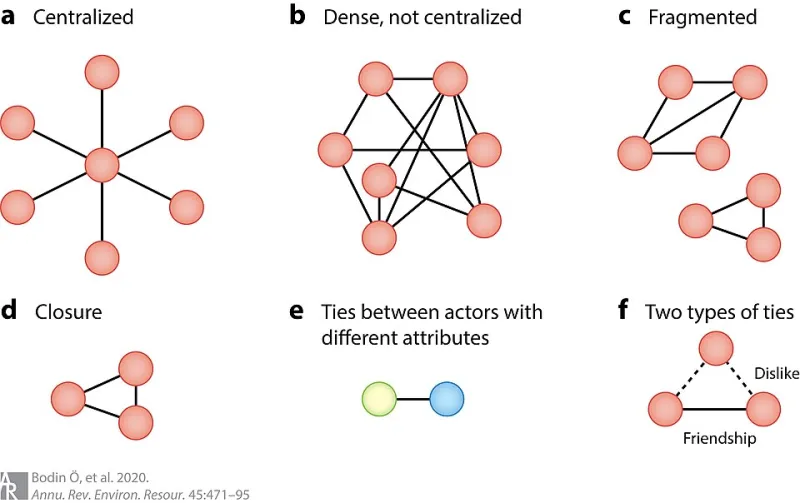
Photo: Örjan Bodin, María Mancilla García, and Garry Robins, CC BY 4.0, via Wikimedia Commons
There's a specific kind of silence that happens right before something breaks. Not the peaceful kind — the pressurized kind. The kind where you can feel the air thinning. If you've spent enough time staring at dashboards, watching engagement curves flatten and spike in patterns that don't match any campaign or news cycle, you start to recognize that silence in the data too.
Social media platforms generate staggering volumes of behavioral information every second. Most of it gets processed, ranked, and forgotten in milliseconds. But some of it — the weird stuff, the statistical outliers, the content that shouldn't be getting traction but somehow is — carries a different kind of signal. One that mainstream analysts are only beginning to take seriously.
The Static Before the Storm
In the weeks leading up to the March 2020 market crash, something strange was happening on Reddit. Certain finance-adjacent subreddits were seeing engagement spikes on posts that, on the surface, looked like noise. Meme threads about toilet paper. Jokes about remote work. A weirdly high number of upvotes on three-year-old posts about supply chain logistics. None of it made front-page news. Most of it got filtered out of mainstream feeds as low-quality content.
But pattern-recognition researchers who were watching the metadata — not the content itself, but how it was being engaged with — noticed something. The engagement wasn't organic. It was anxious. Short dwell times. High share rates to private channels. Unusually low comment-to-view ratios, which typically indicate passive consumption rather than community interaction. People were doom-scrolling before doom-scrolling had a name.
This behavioral fingerprint — high passive consumption, low public engagement, elevated private sharing — has since been identified in data sets preceding multiple cultural ruptures. It showed up before several viral moral panics. It appeared in Twitter's engagement logs roughly 18 days before the GameStop short squeeze went mainstream. It's not a perfect signal. But it's a real one.
Bot Behavior as Canary in the Coal Mine
Here's where it gets genuinely strange: bots often move first.
Automated accounts aren't sophisticated enough to understand context, but they're extraordinarily sensitive to velocity. They respond to what's accelerating, not what's already popular. And because they operate at machine speed, they sometimes amplify content that human users haven't consciously registered yet — content that's gaining traction in small, insular communities before it breaks into general awareness.
Researchers studying influence operations have documented cases where bot clusters began engaging with specific narratives weeks before those narratives became mainstream political flashpoints. The bots weren't necessarily creating the trend — they were reacting to early-stage human behavior in niche spaces, acting like a kind of accidental early-warning system for ideas that were about to metastasize.
The irony is almost poetic: the least human element of the internet might be one of the most reliable indicators of where human attention is about to go.
Dead Zones and What Lives in Them
Content dead zones are equally revealing. These are the periods — usually 2 to 6 AM in any given time zone — when algorithmic distribution slows and organic reach drops. Content posted during these windows typically underperforms. Except when it doesn't.
When content performs anomalously well during dead zones, it usually means one of two things: either it's being pushed by automated infrastructure (bots, scheduled posts, coordinated amplification), or it's finding an audience that's awake and engaged at unusual hours because something has disrupted their normal patterns. Grief. Anxiety. Economic stress. The kind of sleeplessness that precedes collective disruption.
Social listening firms that track dead-zone engagement anomalies have, in at least a handful of documented cases, flagged cultural stress indicators that preceded significant public events. The content itself varied wildly — financial anxiety memes, searches for legal resources, sudden interest in historical parallels to contemporary crises. The pattern was the signal, not the subject matter.
Reading the Noise
The challenge, of course, is that most of this is noise. The ratio of false positives to genuine predictive signals is brutal. For every engagement anomaly that preceded something real, there are thousands that preceded nothing. This is why no one has successfully built a reliable cultural crash detector from social data alone — and why the few researchers working in this space are careful to frame their findings as correlational rather than causal.
But the correlations are persistent enough to be interesting. And in a media environment where mainstream outlets are often the last to recognize emerging trends — partly because their own algorithms reward established narratives over emerging ones — the case for paying attention to the static gets stronger every year.
There's a version of this that's already being practiced, quietly. Hedge funds have been using social sentiment analysis for over a decade. Political campaigns run continuous social listening operations. Brand risk teams at major corporations monitor engagement anomalies as part of crisis preparedness protocols. The infrastructure for decoding the static exists. It's just not evenly distributed.
What the Feed Is Actually Telling Us
The deeper implication isn't really about prediction. It's about the nature of collective behavior online. The feed isn't just a mirror — it's a nervous system. And like any nervous system, it registers distress before the conscious mind catches up.
When engagement patterns fragment, when sharing goes private, when bots start amplifying content from the margins, when dead zones come alive — something is shifting in the collective mood. The algorithm didn't cause it. It just noticed it first.
The question worth sitting with is this: if the data is already carrying these signals, and the tools to read them already exist, what does it mean that we keep being surprised? Maybe we're not actually interested in knowing early. Maybe surprise is the point — the emotional beat we're all waiting for, the moment the static finally resolves into something we can name.
Or maybe we're just not tuned to the right frequency yet.